That Oceanic Feeling
...of being carried, however briefly, by the same tide. -- The night the Knicks won.

I came to in the back seat of a car, my upper body lying sideways across the leather. I didn’t know where I was or how I’d gotten there, only that I was in a moving car. Then I heard two people speaking in low, anxious voices.
“How are the Knicks doing now?” the driver asked.
“I don’t know,” the woman beside me said. “They were losing, but we had to leave.”
I tried to sit up but couldn’t. A hand pressed lightly against my back. “Hang on,” she said, “We’re almost there.”
I remembered the woman was Jessica. I had met her in March through Josh, a grad-school friend turned Brooklyn editor — what happens to young Jewish men with humanities degrees if not stopped. We had spent a rainy Sunday at Josh’s apartment, drinking his tea, eating his food, and hearing about his unrequited love for a woman uptown. Then, on a sunny Sunday in May, the three of us visited the “New Humans” exhibition at the revamped New Museum. The gory exhibit traumatized Jessica, but afterward we recovered over noodles at Xi’an Famous Foods.
Last night was the third time Jessica and I had hung out. We wanted to see the Knicks game together, but Josh had recently gotten himself into a whirlwind romance and made the only defensible decision to spend his Saturday evening with his new paramour instead of watching the Knicks make history with his old friends.
Jessica and I decided we’d meet anyway. She brought Son, a finance bro she had recently met through another friend group. Not long after we sat down at Locanda Verde, I realized that the three of us were on a blind friendship date.
“I went to DePauw,” Son said.
“Wow, I live in Chicago!” I said.
“Not DePaul,” Son said, “DePauw. In Indiana.”
“Ah! DePauw!” I pretended to know.
“What do you do?” Jessica asked Son.
“I’m a quant analyst at Deutsche Bank,” Son said.
“My dad worked at Citi, right here.” She pointed out the window at the building across the street.
“Do you also like investing?” Son asked.
“Not really. I would tune out when my dad talked about it.”
“What kind of sectors did he cover?”
“When I said I tuned out, I tuned out.”
But by the end of dinner we had found one thing in common: we all loved Scotland. Son lit up talking about his year studying abroad in Glasgow and traveling around Europe with friends from the same program. I bored them with my obsession with the Scottish Enlightenment. Jessica had a penchant for men from the British Isles, and had once moved to London for one. We finally crossed the friendship barrier by sharing a Lemon Tart with Buttermilk gelato.
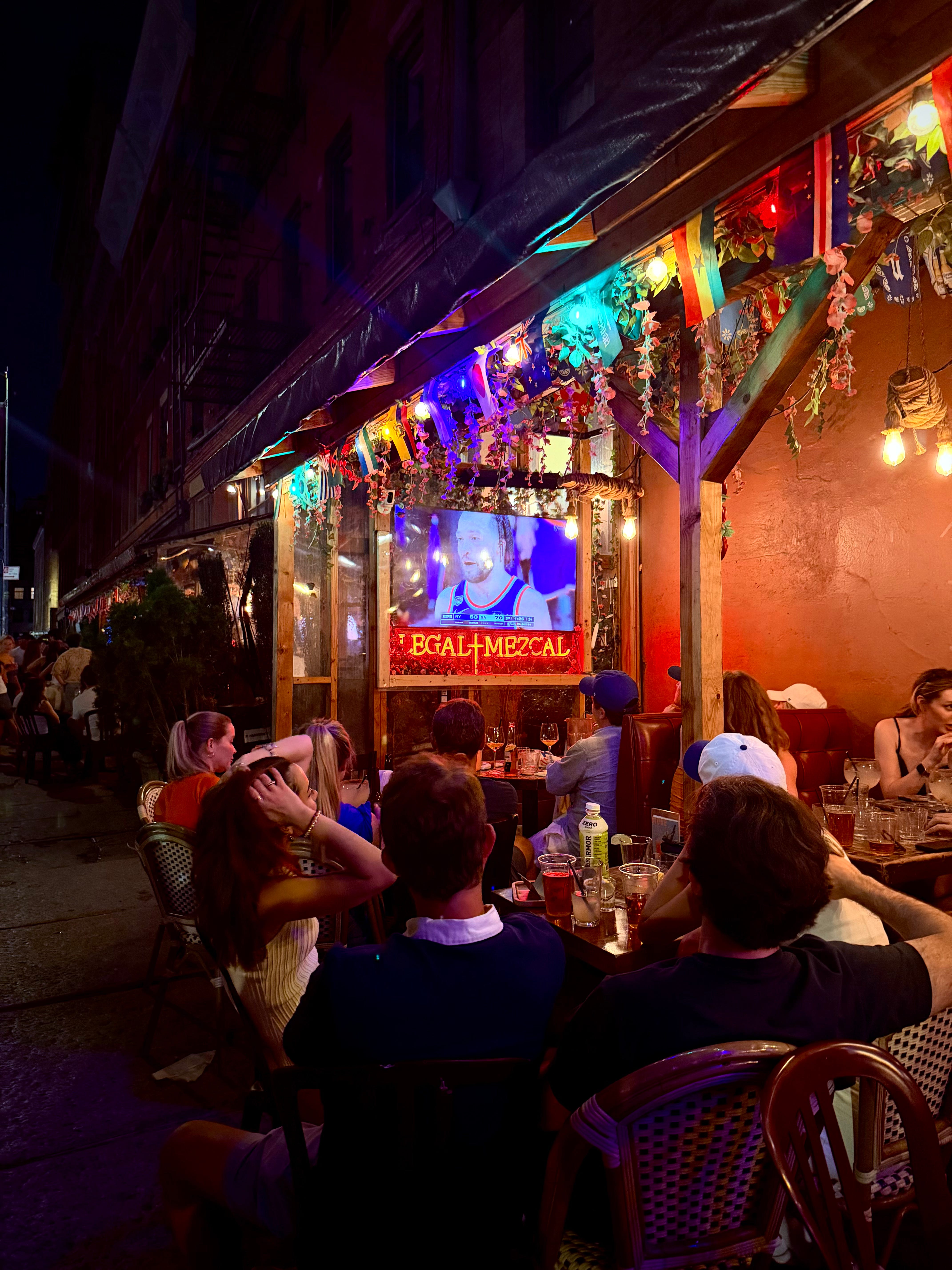
We left the restaurant at the end of the third quarter and joined the crowd on Harrison Street to watch the rest of the game. The air was thick. With every passing second, the bars grew quieter as the Knicks fell further behind. With eight minutes left in the fourth quarter, they were down by ten. “It’s okay,” I said, “if the Knicks lose, we can go see them play at Madison Square Garden on Tuesday.” My fellowship at NYU was ending, and I could use one last New York extravagance. Jessica assured me the tickets would be out of reach, and that my best bet was for the Knicks to win the championship tonight so we could join the celebration.
Neither of us followed basketball. The last time I watched the NBA, Jeremy Lin was still around. Jessica, though she had lived in New York almost her entire life, was born decades after the Knicks last won a championship.
But Jessica agreed that New York seemed different lately. The balmy weather had brought people – absurdly beautiful, happy people – into the streets. After a harsh winter and a few life-pausing snowstorms, a little heat bothered no one. The World Cup was starting, and the Knicks had advanced to the finals. I had been living one block from Washington Square Park and periodically woke up to NYU students screaming, cars honking, engines revving all night. If it had been any other place, or any other time, I’d be supremely annoyed. But I had simply gotten used to falling in and out of sleep.
It was impossible not to be swept into this collective effervescence. For the past three months, I had walked through the park almost every day: on my way to the office, on my way back, in the morning, at midday, at midnight. Each time, I changed my path and slowed down as I moved through the crowd, though I always passed under the Washington Square Arch, which reminded me of Paris. On weekends I lingered, watching the chess games, the “debate me” corners, the sloppy magicians, the skateboarders, and the talent shows that took place at all hours around the dry fountain at the center.
“You know why the park is so magical?” Jessica said. “I had a horrible week last week, and I went there to cry. But it felt so normal. Nobody thought I was weird. An old Italian man sitting next to me showed me his photo album of the park and told me stories about it from when he was young.”
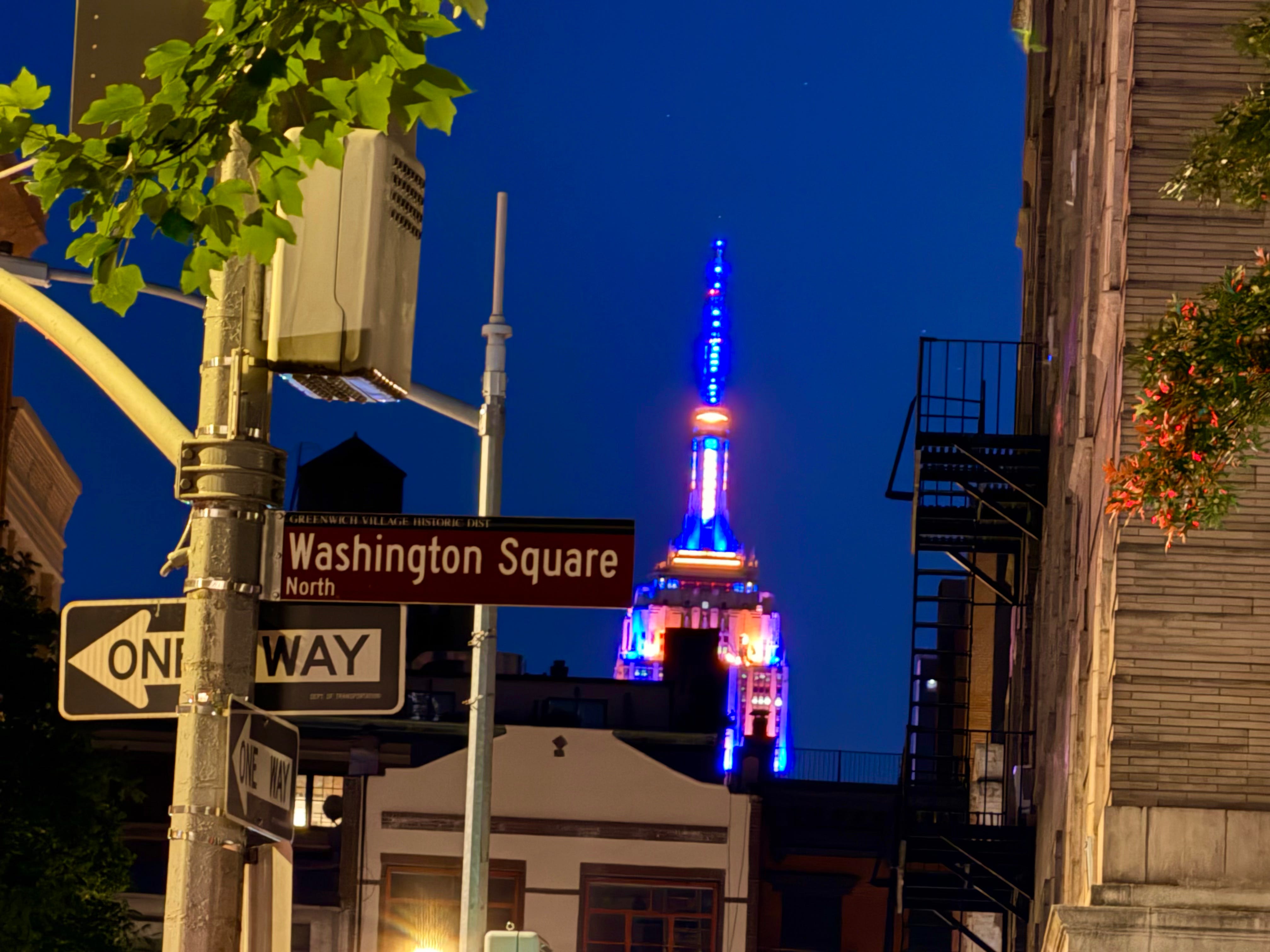
Whenever I was in the park, every fashionable diagnosis of modern life seemed to dissolve. Here were the supposedly vanished third places, the supposedly eroded civic life, the supposedly lonely and isolated young, gathering nightly under the plane trees, beneath the glowing arch and the watchful needle of the Empire State Building, to flirt, argue, heckle, show off, do nothing, and submit themselves to the company of strangers.
And now I was standing outside a bar in Tribeca with people I had just met, watching a game I didn’t follow and cheering for a team that wasn’t mine, when I felt all the blood leave my brain. My stomach turned; my vision blurred. I was covered in hot sweat, then cold. I dragged myself to the sidewalk and collapsed. I heard Jessica asking over and over, “Are you okay?” and I mumbled, over and over, “yes,” — thinking, Stop asking and leave me alone! — before I could no longer speak. I was not okay. I thought I was dying. But with my dying breath I did not want my new friend to hate me forever for robbing her of the last eight minutes of the Knicks game.
When I came to, I was in an Uber next to Jessica, who was speaking nervously with the driver. I felt blood slowly return to brain. I eavesdropped on their conversation until I could finally sit up. Son was gone. I checked the score on my phone: 86-85. Five minutes left. “The Knicks came back!” I said, surprised by the strength in my own voice.
“Oh my god, what happened?” Jessica looked at me with concern and confusion, half shocked by my sudden return to life, half shocked by the Knicks’ comeback. She had a melodic, sometimes melodramatic way of speaking; listening to all the emotion in her voice, one would have guessed that she was a litigator who had gone to Yale. This city is full of too-well-put-together people with seemingly perfect lives, which made her vulnerability and unpretentiousness all the more endearing. We burst out into hysterical laughter and told the driver to stop the car.
We jumped out at 6th and King and ran into the first restaurant we saw, Charlie Bird. We were told that it was closing, but we pouted shamelessly, and the owner let us in to watch the last few minutes of the game. “Regardless of what happens, please do not break any glasses.” That was the only condition.
Then it happened: the Knicks won, 94-90. Cheers, hugs. We ran outside, and so did everyone else. Across the street, firefighters from Engine 24, Ladder 5, Battalion 2 were outside celebrating. I turned left and saw fireworks rising downtown. I turned right and saw the Empire State Building lit up in orange and blue. The city had erupted into a carnival.
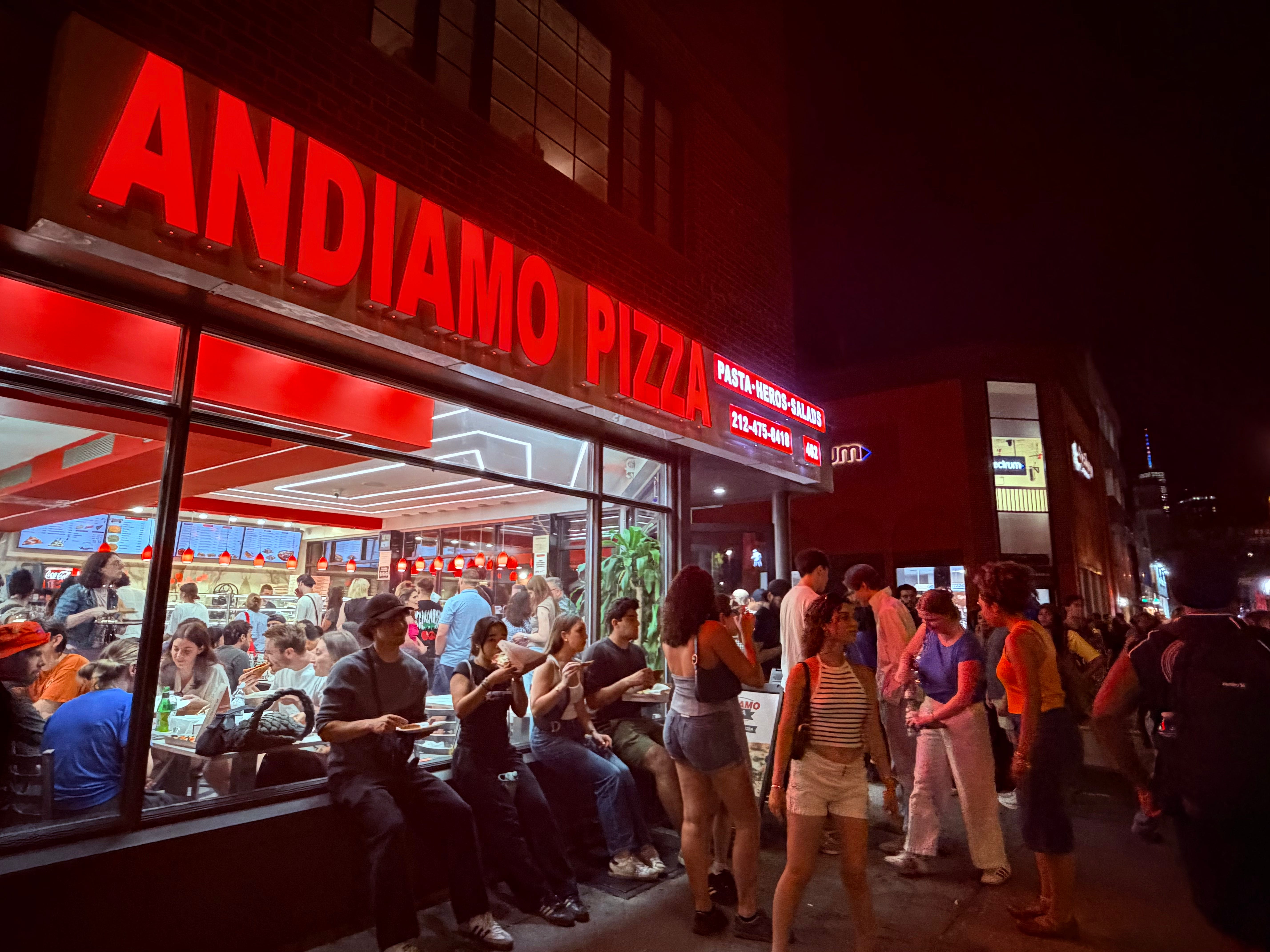
Jessica and I joined the crowd walking north. I couldn’t remember the last time I had seen this much happiness on people’s faces. I kept tripping and stubbing my toes on the broken pavement, but I didn’t feel a thing. Jessica kept saying that she had never seen New York like this, not even on New Year’s. A stranger handed me a pineapple sparkling water. I opened it and drank as I walked until, half a can later, I realized it was hard seltzer.
By the time we reached the NYU area, the crowd was dense enough that Jessica and I had to make sure we didn’t lose each other. Traffic had stopped. People were hanging off scaffolding. I took a video of someone who seemed comically excited, then realized they were taking a video of me, apparently looking just as deranged. The barricades around Washington Square Park had been knocked down, and people had swarmed in, forming a giant dance party. The police were casually escorting people out through the Fifth Avenue entrance, but all the other entrances were wide open, and students kept rushing in. No one seemed to be getting arrested, but Jessica insisted we not cross the barricade, since she had to appear in court the next week. I thought about leaving her there to join the party, but remembered she had sort of just saved my life.
As we watched the celebration from outside the park, it occurred to me that most of these people were not born in New York; many were not even Americans; half were converts of convenience whose knowledge of the Knicks’ roster began and ended with Jalen Brunson. Yet here we were, brought together by something that could have been the Knicks, or anything else. It seemed the city had not really been missing an NBA championship. They had been missing an excuse to be released from themselves and dissolve into one another. Under the violet summer sky, the city roared, not for any single happiness or sorrow, but for life itself. And in that roar was a consolation that, for a moment, felt like salvation: the oceanic feeling of being carried, however briefly, by the same tide.
I thought of my new friend, and of all the other encounters this city had given me. I thought of the bubble tea runs, the thunderstorm after Romeo and Juliet, the smoke breaks, the first fireflies; the long walks up and down Fifth, back and forth between NoHo and Chinatown. Suddenly I felt as if I were twenty again, living in Warsaw, strolling down Krakowskie Przedmieście at night with my friends, with our whole lives ahead of us.
I turned to Jessica, wanting to tell her what I was thinking, when she spoke first, her eyes glittering: “Just when I thought we couldn’t have nice things…”